


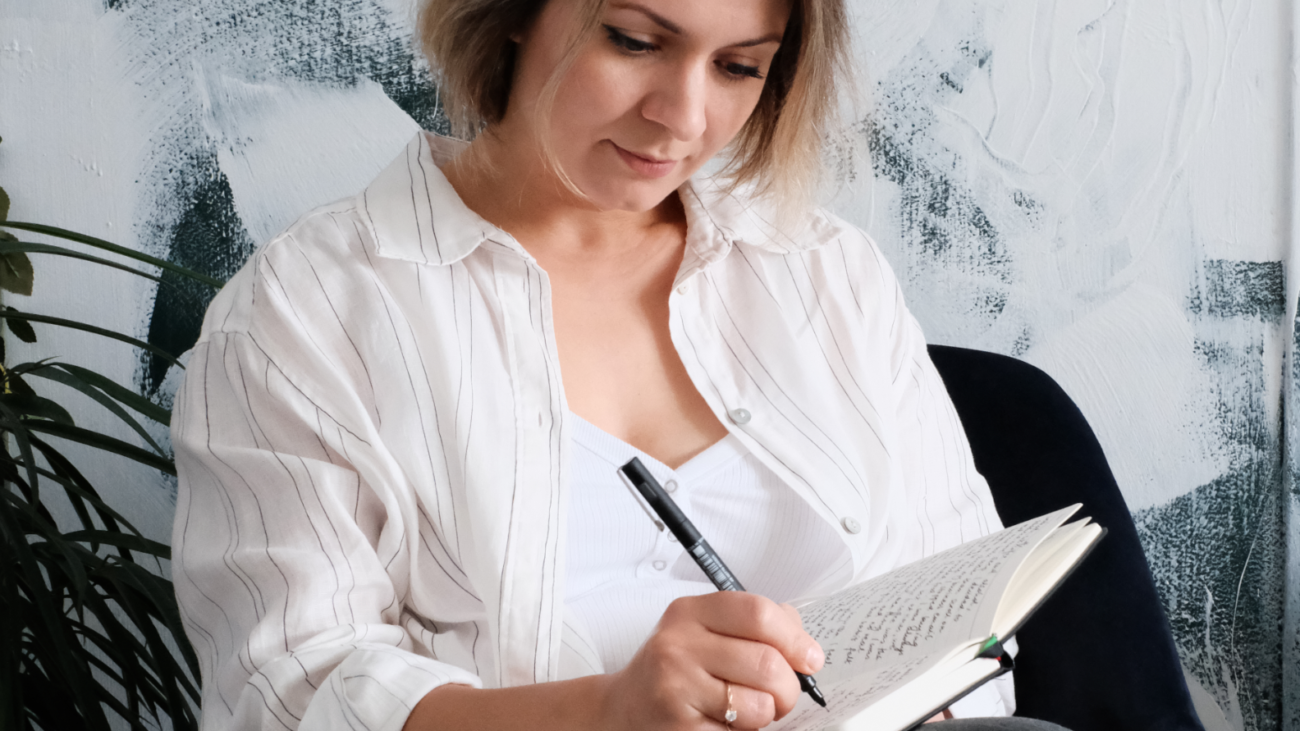
How Art Saved Me: The Origin Story of InnLyte
The article below is a word-for-word transcript of the debut episode of my monthly solo podcast, InnLyte: Unscripted with Dee Stoppa.
In this episode, I share the raw, personal story behind the platform—without a script. I open up about the pivotal moments when painting, photography, and hands-on creativity became my essential lifeline, and how those experiences laid the foundation for the mission we are building today.
You can choose to listen to the full audio episode right here, or scroll down to read the story.
The Crisis Point: 2017
I want to bring you back to 2017. I have a very vivid memory of feeling stuck. I was in the smallest possible single bed bedroom, which was my home office and became my bedroom as I was separating. It was a challenging transition time. I was considering what to do next, knowing deep down I couldn’t stay in the situation I was in. I was deeply unhappy. I felt like a prisoner.
It was during this time that I noticed painting, creativity, and making art became a real saviour. It was helping me to process my thoughts, to process my feelings, to plan what was next, and to gain clarity. I had a real “aha moment.” It was like, “Wow, this is so impactful.” Here I was, at a sliding door moment in my own life, and I really needed to get clarity. I needed to be connected with who I was and what I wanted, because decisions like that are not easy to make, especially with small children involved.
It felt like such a difficult time, particularly because I was quite isolated. My family was all abroad, and I didn’t feel like I had friends I could open up to. It just felt like my life from the outside was perfect—everything you could dream of: a marriage, a house, two children. I was self-employed at the time, working as a commercial photographer. Yet, I was going through a really, really rough time.
Art was my saviour. It prevented me from perhaps going down the route of hurting myself, or drinking, or taking drugs, or whatever else people often do when they’re struggling and looking for an escape. So I feel very grateful that I wasn’t tempted to go any other way; it wasn’t even on my mind. I knew I needed to get clarity. I needed to be strong and connected with myself, and art was truly that practice. It became my anchor, my grounding practice. It was something that really helped me throughout that time, and it provided that “aha moment.”
Childhood Roots & Teenage Depression
I look back and I come from a family of artists and makers. It wasn’t necessarily my first choice to go and study art at the age of 12, but I was encouraged—I was basically pushed to do it. So, it didn’t feel like my own choice initially. I was happy I did it; I loved art school. But at the same time, the best, or my favorite, thing about art and making was always the feeling. It was always the process. It wasn’t about the final product, the final outcome. It was all about providing that sense of relief and escape, and a sense of connection with myself and who I was. In a way, it was creating a safe space inside me; it was creating that sense of home.
I remember one particular summer holiday. I was probably around 13 or 14, and I spent most of those days in a tiny little hall in my parents’ cottage. It was tiny. It was just a little desk with my woodcarving tools, and I worked on a mirror frame that I still have. I’ve brought it everywhere I’ve gone later in life, and as I’m looking at it, it reminds me that that period of time was my happiest childhood or teenage memory that I can think of. Somehow, when I think of my childhood, it all seems very dark and blurry.
I struggled with depression when I was around 17, 18. I moved out of my family home at the age of 18, and the change of environment really helped me to recover. And, alongside that, there was also art. I drew and painted on repeat, and destroyed the pictures after. It wasn’t about creating something pretty. Again, it was just about processing my emotions. At the time, I felt a lot, but I didn’t have the vocabulary to talk about it. I didn’t want to talk about it. I tried therapy at the time, but I was hating it; I didn’t like it. I suppose having that physical, expressive art practice helped me with releasing my emotions—releasing my anger, my resentment, whatever else I was feeling, and that sadness. Here I was, at the age of 18, feeling completely unsupported and very alone in the world, feeling like I needed to find my own way. Art was always that crucial part of my mental health toolkit.
The Evolving Toolkit: From Art to Meditation to Photography
Around the age of 18, I started to explore further, and I was really drawn to learning how to meditate. I set myself up for a few retreats, and that really helped me to get the basics and it truly influenced me to have that reflective, meditative practice in my life moving forward. So, these practices are very important. I would equally value meditation, writing, and visual arts-type expressive creativity.
Sometimes when I go through happy and less eventful times of my life, I tend to forget how important art and creativity are for our mental health, for our wellbeing. But life has a way of reminding us. There are always challenges, and in recent years, I was reminded of that once again.
I was dealing with a very challenging pregnancy before my third child was born. There was so much unknown, so much stress about what was ahead. How do you deal with knowing that life will not be the same, yet you can’t imagine how things would look? I found it really challenging. At the time, I didn’t feel like I wanted to do painting or sculpture, and I didn’t even have a physical space or availability for it. So I bought myself a new camera and I totally fell in love with it. I fell in love with photography and making movies, and it stayed with me.
My relationship with photography is quite unusual, I suppose. At the start, in my head, it was very much connected with my father because he used to be a photographer, and I didn’t feel like it was my own practice, if that makes sense. But over time, especially in recent months and years, it has provided a lot of joy and a lot of creative outlets, so I’m really embracing it recently. I’m particularly falling in love with making videos and short documentaries for InnLyte, where I visit artists and makers in their studios and ask them questions, hearing their stories about their own lived experience of creativity for wellbeing and mental health.
So, my own creative practice has evolved throughout the years, and that’s fine. It’s beautiful, and it’s always the case. Don’t be afraid to experiment and open up to new materials, new forms. Stay open, stay curious. I feel like sometimes we try to put ourselves in boxes even when it comes to creativity. I do get it, especially when you’re a professional artist or maker; you want your art to look cohesive and recognisable. But when you’re just using it to feel better, to connect with yourself as a tool for clarity, feel free to explore as much as you want. There’s no pressure to stick with one medium.
Beyond the "Creative Box"
All of those lived experiences really shaped who I am and how I process things. I would like to admit that over the last few years, I’ve gotten better at verbally communicating how I feel, and it definitely has to do with a different environment, with the relationship that I’m in, and doing a lot of work on myself. Also, attending therapy multiple times in my life whenever I was going through harder times—so I’m not trying to dismiss it. It’s a very important way of dealing with whatever you’re going through; it’s important for our own growth and understanding.
What I’m trying to say is that creativity and making things with our hands is often seen as something for talented people only. Early on, whether at home or at school, we put ourselves in the box of, “I’m not the creative one, I can’t do this.” We just look at the outcome, and it might not be as visually appealing as the person sitting behind us in the class, and we just put ourselves in that box, thinking, “My sister is the creative one,” or “My friend is the creative one. They’re really good at arts and crafts. I’m not that.” And we totally dismiss the huge mental health and wellbeing benefit of the process of creating. The process of being focused, and being in the flow, and allowing ourselves to be still in a way, and hear our own thoughts, connect with our own intuition, to get clarity while we’re actually doing things with our hands.
The InnLyte Blueprint: Inspiring Your Inner Light
I’ll be sharing with you, in my monthly episodes, my struggles, my wins, and all the behind-the-scenes of working on InnLyte, which is an independent education platform where I’m hoping to inspire, educate, and guide you on how to be more connected with yourself using creativity.
There are a few series that I’m planning. The first one is already available: the Creativity for Wellbeing Studio Series. I visit artists and makers in their studios, and we talk about their own experiences, their own practice, and their own creative journey. It’s very fascinating to me to actually hear those stories, and it’s just beautiful. The amount of applicants I got for the open call for the series is quite overwhelming, and it gave me chills reading the submission forms, because it’s such a variety of human experience, and it’s going to be a beautiful series.
I’ll also interview researchers and facilitators in the arts and health, creativity for wellbeing area, just to give you more understanding of the benefits and the challenges behind it. And later, we will be introducing InnLyte Academy, where I’ll share guides, books, online courses, and facilitator courses.
I’m working on a deck. It’s not a traditional oracle type of deck. I would like to see it more as a game, as a tool for self-exploration and creativity. The guidebook will be as important as the actual card deck, because it will include art exercises for each card, and writing prompts, as well as the meaning of each card. So there’ll be a video series on me creating the illustrations for the decks, but also on the art exercises. So I’m very excited about that. It’s a lot to do; it’s a lot of planning, a lot of bringing into life, especially considering the fact that it’s just me working on it.
Join the InnKeepers Community
I’ll be excited to share my progress with you, and excited to start building a community of like-minded people. I’d like to call them InnKeepers, because we’re the ones who are looking after our inner light, and also inspiring others to do the same—to nourish ourselves, to reconnect with ourselves, and to be more creative. Because I think that’s what makes us human. It’s that joy of making something new, joy of creating with our hands, joy of innovating. We are creative at our core.
If this story resonated with you, I would love to connect with you personally.
-
Follow the Journey: Join me on Instagram for behind-the-scenes updates, or connect with me on LinkedIn where I share insights on building the foundations of Creative Wellbeing.
-
Subscribe to the Podcast: Never miss a monthly episode. Subscribe to InnLyte Unscripted on Apple Podcasts, Spotify, or wherever you listen to your favourite shows.
-
Newsletter: Join the InnLyte community for updates on the Studio Series and insights into Creative Wellbeing, delivered with intention. Please use the form below.
